The Cave Houses of Guadix
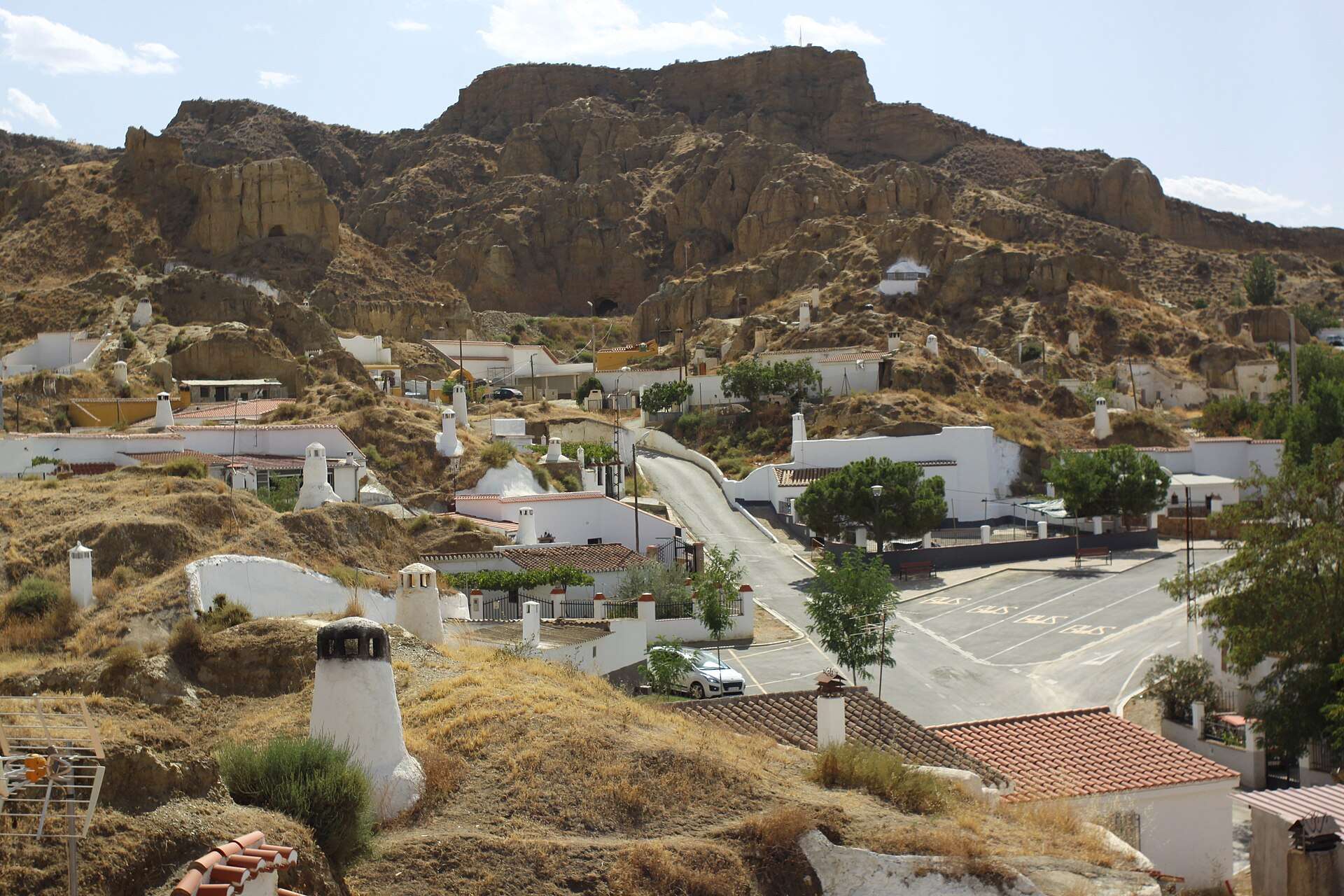
An hour east, some two thousand cave houses dig into the hills — whitewashed chimneys in bare earth, homes at twenty degrees while summer bakes the badlands. People live here; visit accordingly.
The short version
- Trains and buses run Granada to Guadix in about an hour (renfe.com), climbing onto the high plain where the badlands of the Hoya de Guadix open around the town.
- The cave district is the headline: the Barrio de las Cuevas counts among Europe’s largest inhabited cave quarters — roughly two thousand dwellings cut into the soft hills over centuries, whitewashed facades and chimneys marking homes that hold a constant cool through Andalusia’s furnace summers.
- The etiquette per the alarm is the visit’s spine: these are lived-in homes, not a museum set — lanes walked at neighborhood register, doors and windows left unphotographed, and the handful of families offering paid interior visits doing so on their own signs and terms.
- The Cueva Museo settles the interior curiosity properly: a furnished cave home run as the district’s museum, explaining the digging, the climate arithmetic, and the life — the alarm’s answer to peering.
- The miradors carry the spectacle: the viewpoints above the barrio frame the chimney field against the badlands and the Sierra Nevada’s snow line — late light turning the earth red and the whitewash pink.
- The lower town rounds it: the sandstone cathedral built over the mosque site, the Moorish alcazaba’s towers, the arcaded plaza’s long-lunch economy per the alarm — with the wider Geopark of Granada’s ravine country beyond for drivers extending the day.

Getting there
The hour’s ride is the whole logistics — Guadix’s station and center sit close, and the cave district climbs directly from the lower town. The day divides naturally: monuments below, caves and miradors above, with the climb between them earning the lunch. Summer visits invert the clock per the alarm’s twenty-degrees fact — the district’s residents retreat inside for good reason, and the mirador hours move to morning and evening.
The day
The lower town opens it: the cathedral’s red sandstone bulk (the tower visible from most of the province), the plaza’s arcades, and the alcazaba’s restored walls for the first orientation over the roofs. The climb into the Barrio de las Cuevas changes the register per the alarm: lanes narrowing between whitewashed cave fronts, chimneys sprouting from bare hillside, prickly pear and dogs and ordinary life — walked as a guest. The Cueva Museo furnishes the interior: rooms hollowed clean, the temperature demonstration working on your own skin, the digging history told plainly. The mirador above delivers the field entire — hundreds of chimneys to the badlands’ edge, the Sierra behind — and the long lunch below closes it at the town’s own pace. The return train runs you off the plateau into Granada’s evening.
When to go
Spring and fall run the walking weather and the clearest Sierra views; summer bakes the surface per the alarm while the caves ignore it — a valid visit built on early miradors and long interior lunches. Winter can throw snow on the badlands, which photographs like another planet and empties the lanes. The Cascamorras festival (early September, shared riotously with neighboring Baza) paints the town — literally — for those who time it deliberately.
Frequently Asked Questions
Do people really still live in the caves?
Thousands do — the district is a working neighborhood with mail delivery, satellite dishes on the hillside, and cave homes bought, sold, and extended like any housing stock. The constant interior temperature is the practical argument, the price per square meter the second one. That reality is why the alarm’s neighborhood etiquette governs the whole visit.
Can you go inside a cave house?
Properly, yes: the Cueva Museo is the designed answer, several families run posted paid visits, and cave hotels rent the experience overnight. The improper version — peering through open doors — is the one the alarm rules out. The museum’s furnished rooms cover the curiosity honestly for pocket change.
Why were the caves dug in the first place?
Layered history: the soft badlands clay invited excavation for centuries, with the district swelling after the 1492 conquest as Granada’s displaced Muslim population settled the hills outside the Christian town. The homes proved superior to the climate above ground, and the digging simply never stopped — extensions still happen by machine today.
What is the badlands landscape exactly?
The Hoya de Guadix’s eroded clay ravines — a semi-desert of gullies and hoodoos ringed by mountains, now part of the Granada Geopark. It reads like the American Southwest wearing Spanish light, and it’s the backdrop that makes the mirador photographs. Drivers can loop deeper into the ravine country toward Gorafe’s dolmens.
Guadix or the Alpujarras from Granada?
Both documented on this network: the Alpujarras for white villages stacked in mountain valleys, Guadix for cave streets in badlands. Vertical Berber villages versus underground Andalusia — the honest Granada base does both on separate days, and Guadix is the one the crowds haven’t found.